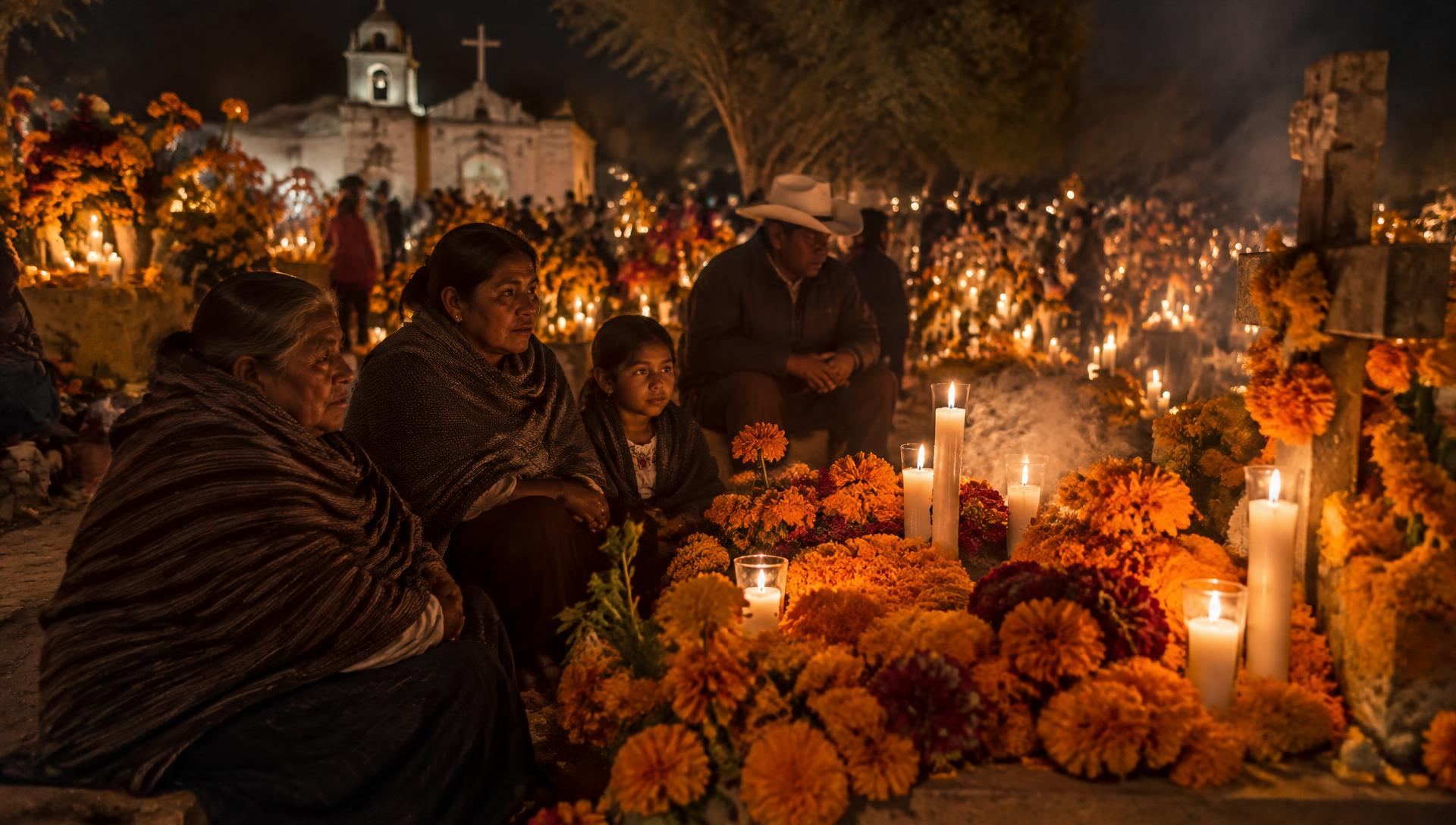
From the canals of Mexico City to the white altars of Puebla and the candlelit cemeteries of Oaxaca, Día de Muertos is not a festival you watch. It is a homecoming you are invited into — if you know how to arrive.
The smell arrives before anything else. Copal resin, sweet and smoky, drifting over a cemetery wall. Then the color: a river of orange marigolds laid petal by petal from the gate to the graves, so the souls can find their way back. By midnight, thousands of candles burn across the hillside, and nobody here would call it a sad night.
Día de Muertos — the Day of the Dead — is Mexico's most intimate public celebration. Rooted in Indigenous ways of honoring ancestors and woven together with the Catholic feasts of All Saints and All Souls, it was recognised by UNESCO as Intangible Cultural Heritage of Humanity. Between the last days of October and November 2, families across the country build altars, clean graves, cook the favourite dishes of those they have lost, and wait for them to return.
But there is no single Día de Muertos. Travel three hours in any direction and the tradition changes its clothes. We followed it through three places that tell the story better than anywhere else.
Chapter I · Mexico CityA capital that keeps a vigil
In the capital, the celebration moves at two speeds. In the centre, the city stages itself: giant catrinas, monumental offerings in the Zócalo and a parade along Paseo de la Reforma that has grown into one of the largest public events of the year. It is spectacular, crowded and unmistakably twenty-first century.
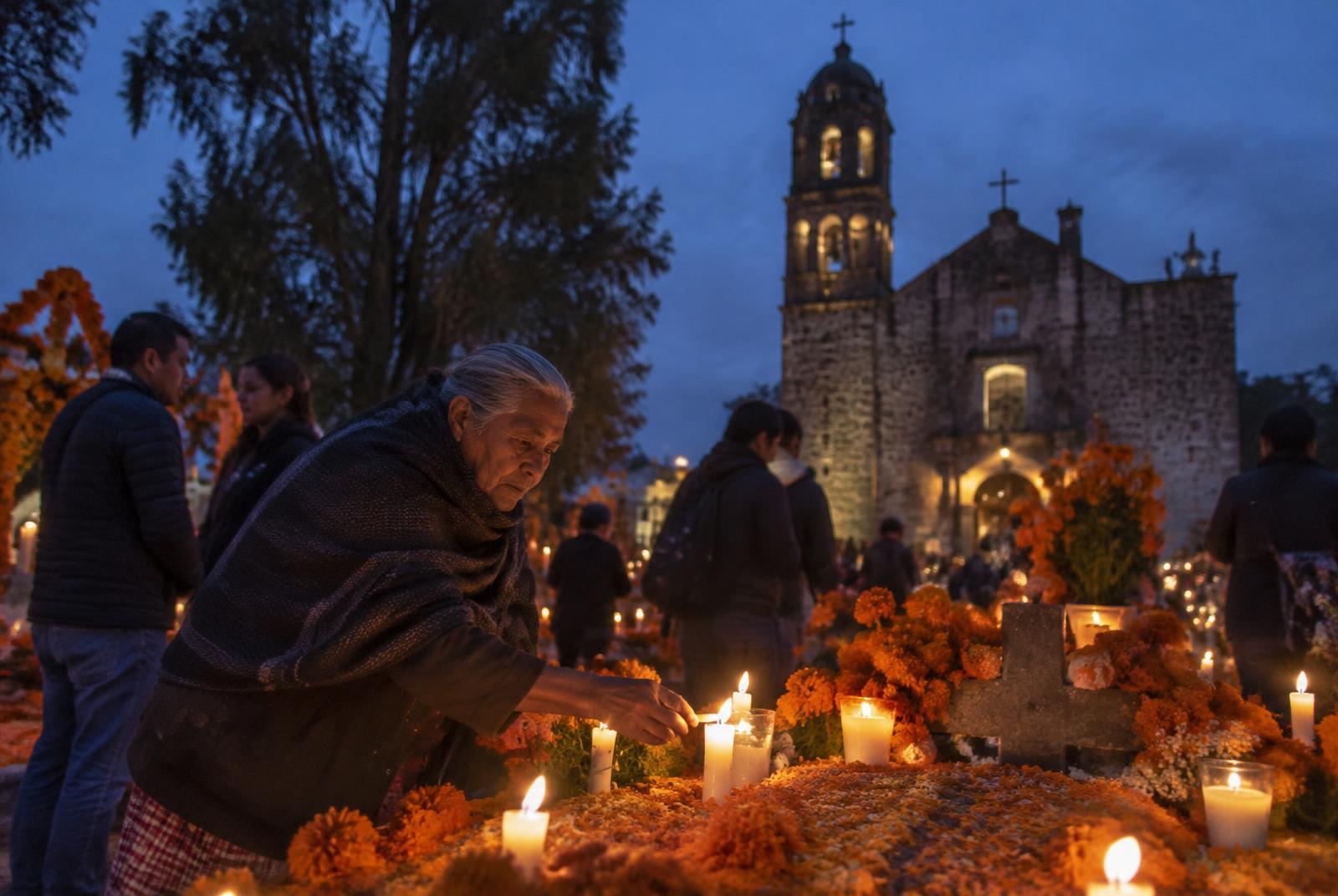
Then drive south, past the last subway stops, to San Andrés Mixquic. Here, among fields that once fed Tenochtitlan, the old rhythm survives. On the night of the alumbrada, families sit on the graves of their parents and grandparents beside the stone church, light candles one by one and keep watch until late. Visitors come in their thousands; the families welcome them, and the vigil goes on anyway.
“We don't come here to mourn them. We come so they don't arrive to an empty house.”
— A grandmother in Mixquic, lighting candles on her husband's grave
Chapter II · PueblaThe white altars of Huaquechula
In most of Mexico, the altar is a riot of orange and purple. In Huaquechula, in the state of Puebla, it is white. Families who have lost someone during the year build towering ofrendas several tiers high, dressed in satin and lace, crowned with angels and mirrors, the photograph of the departed set at the centre like a portrait in a chapel.
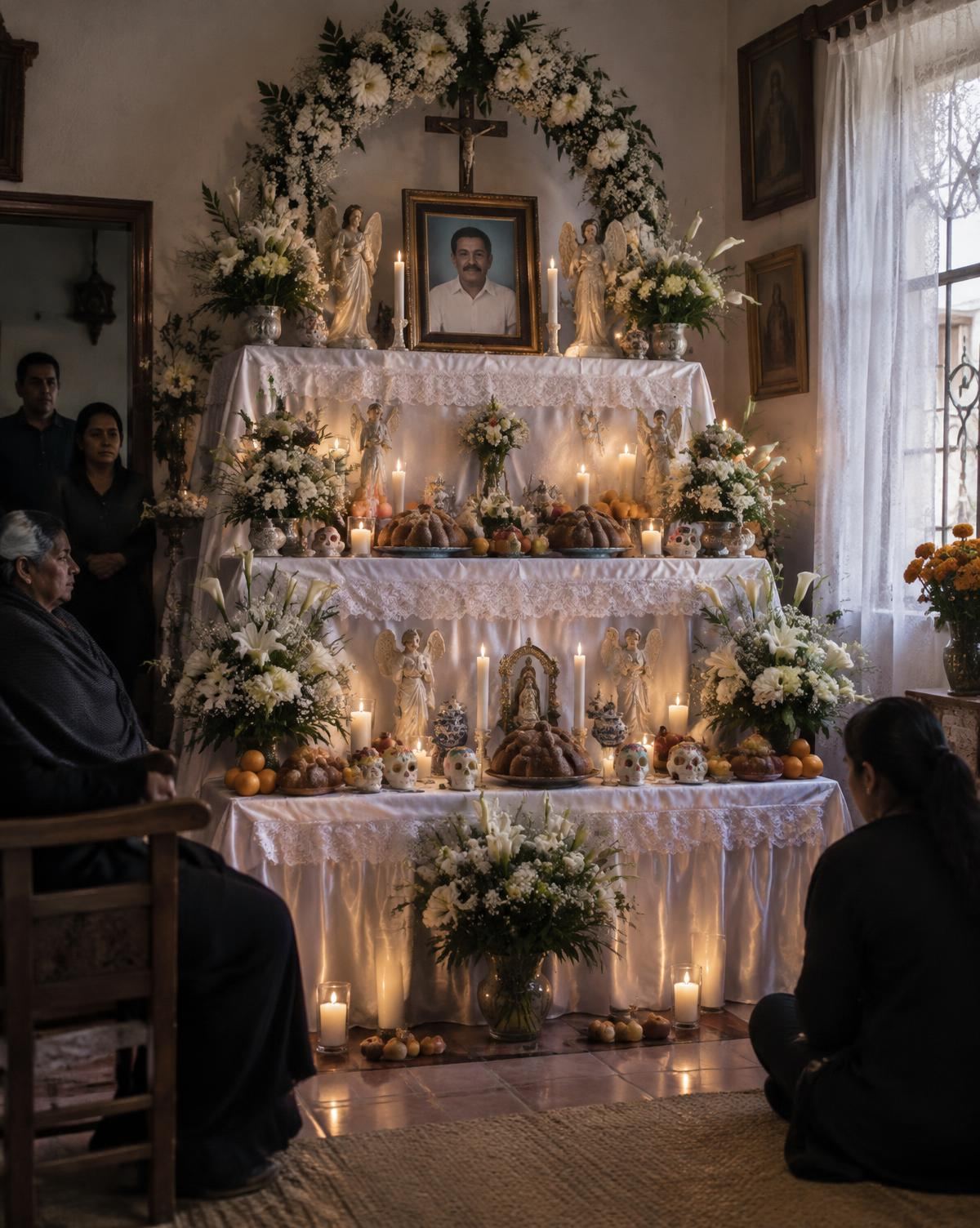
On November 1, doors open. Strangers are invited in to pay their respects, and by custom they bring a candle; in return, the family often offers coffee, bread or a tamal. To be handed a cup of something warm in front of a stranger's altar is one of the most humbling moments a traveler can experience in Mexico — and one that only works when it is approached with care, in small numbers, and with someone who knows the town.
Chapter III · OaxacaThe valley where the night never ends
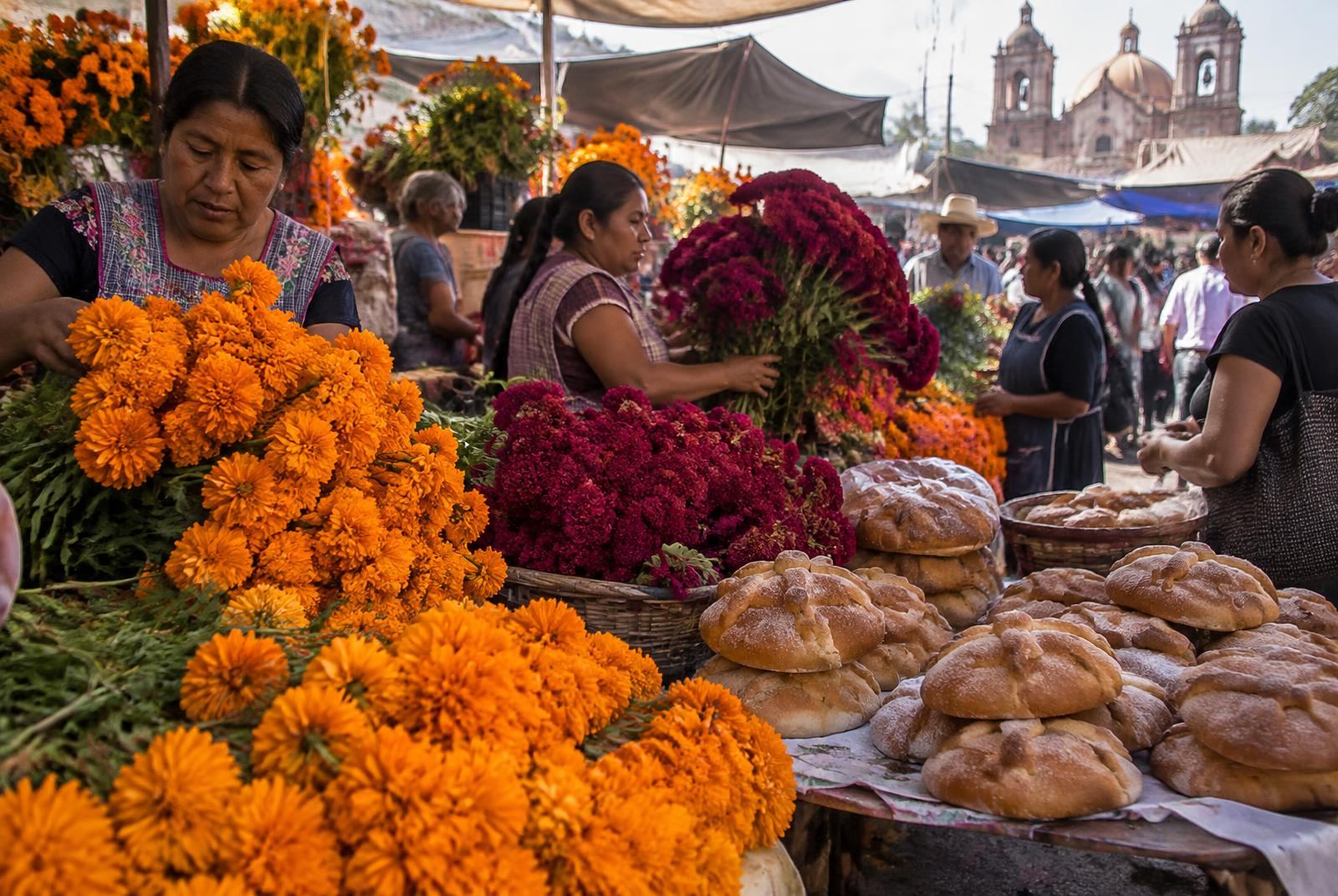
Oaxaca begins preparing weeks in advance. Markets fill with mountains of cempasúchil and magenta cockscomb, sugar skulls, chocolate for drinking and the round, egg-rich pan de muerto decorated with tiny painted faces. Sand tapestries appear in plazas. Kitchens smell of mole.
Then come the nights. In the cemeteries around the city, families stay until dawn among candles and flowers, sometimes with a band playing the songs their loved ones liked best. In the villages of the valley, the comparsas take over the streets: masked dancers, brass bands and fireworks, part carnival and part prayer, moving from house to house until the early hours.
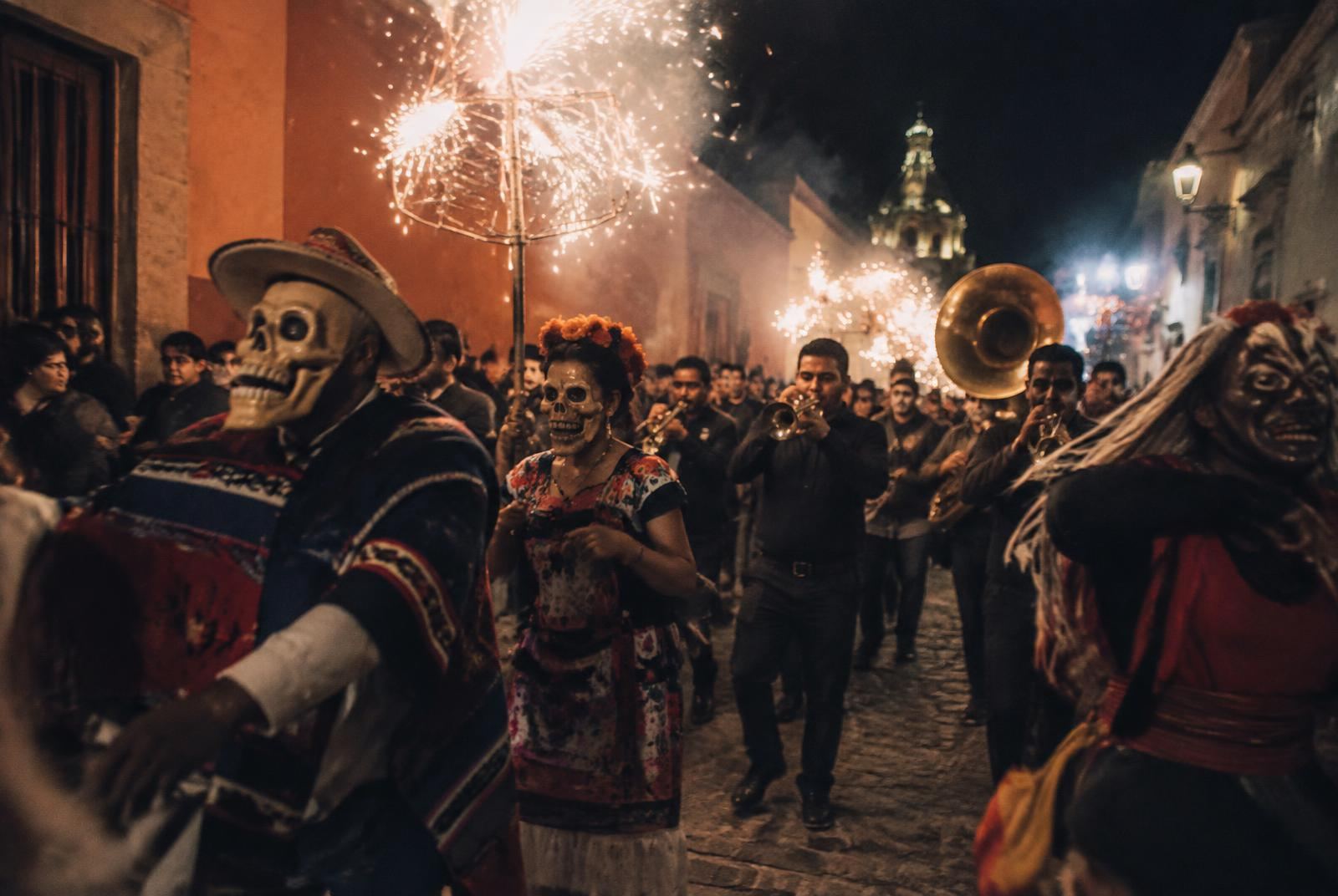
It is beautiful, and it is fragile. Oaxaca's celebration now draws visitors from all over the world, and the difference between being a guest and being an intrusion is often a matter of a few metres, a camera flash, or a question not asked. That is where the way you travel matters most.
EpilogueWhy it stays with you
Travelers usually come for the colour. What they take home is something quieter: the sight of a family eating beside a grave, laughing; a child explaining which photograph is her great-grandfather; the realisation that in Mexico the dead are not gone, only away. Few journeys anywhere offer that kind of intimacy. Few require as much respect to receive it.
Field notes for tour operators
As a Mexico DMC and inbound tour operator, we design and operate Día de Muertos departures every year. This is what makes the difference.
- 01
Book early
Late October and early November is one of the highest-demand periods in Mexico City and Oaxaca. Hotels, private transport and key guides should be secured many months ahead.
- 02
Choose the right nights
Each community keeps its own calendar. Exact dates for vigils, open houses and comparsas vary by place and can change, so we confirm them each year before finalising the routing.
- 03
Small, hosted, respectful
We favour small groups, local hosts and community-led visits, and brief travelers on etiquette: ask before photographing, no flash at graves, bring a candle or flowers when invited in.
- 04
One route, three moods
Mexico City for scale and spectacle, Puebla for intimacy, Oaxaca for depth. Combined well, the three tell the whole story in one journey.
Mexico City, Puebla & Oaxaca
Our nine-day journey from the capital through Puebla and Oaxaca to the Pacific can be timed around Día de Muertos.
Frequently asked questions
When is Día de Muertos celebrated?
Mainly from October 31 to November 2, with preparations starting earlier. The most important days and nights vary from one community to another.
Is it respectful for travelers to attend?
Yes, when it is done with care. Families often welcome visitors, but a cemetery vigil is a family moment. Small groups, a local host and clear etiquette make the experience respectful for everyone.
Can Be Mexico DMC operate a Day of the Dead program for my clients?
Yes. We design and operate private and group programs across Mexico City, Puebla and Oaxaca for tour operators and travel agencies, under your brand.
Want your travelers to live this story?
Tell us dates, group size and traveler profile. We design and operate the program under your brand.
Send us a brief →Illustrative photography